The clear answer
Why is my Ninja Creami crumbly?
Understand the texture, check the basics, and find the next step for your pint.
it out!
You lift the lid expecting smooth scoops and find a pint of dry crumbs instead. It happens to almost everyone, and it rarely means your recipe failed. A crumbly pint usually comes down to two things: how cold the base got, and what the base is made of. Most crumbly pints can be rescued in a few minutes, and a few small changes to how you freeze and spin will keep the next one smooth.
Why a pint comes out crumbly
This machine works differently from a traditional churn. It shaves a solid frozen block with a spinning blade, and the texture you get depends on how that block shaves. When the block is harder than the blade can cut cleanly, it comes away as fine crumbs or powder instead of smooth ribbons.
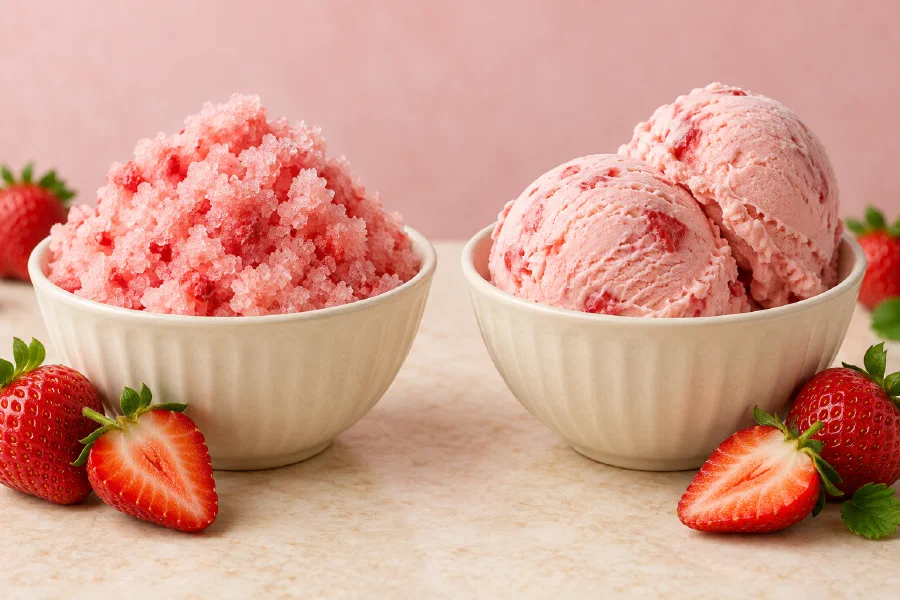
Dry, grainy, breaks apartSmooth texture
Creamy, holds together
Temperature is the biggest factor. The machine is built to process bases between minus 21 and minus 12 degrees Celsius, about minus 6 to 10 degrees Fahrenheit. A freezer set colder than that range, or a pint stored at the back of a chest freezer, freezes beyond what the blade handles well.
What is in the base matters too. Fat and sugar both keep a frozen base a little softer. A base built on skim milk, a protein shake, or plain fruit puree has very little of either, so it freezes into an especially hard block and shaves into crumbs. A base frozen at an angle, or with a hump raised in the middle, also processes unevenly, with dry patches next to smooth ones.
Rescue the pint in front of you
A crumbly pint is rarely a lost cause. Work through these steps in order.
- Run a respin first, before you add anything. One extra pass brings most powdery pints together.
- If the pint still looks dry, pour 1 to 2 tablespoons of milk, cream, or the same liquid you used in the base over the top, then respin again.
- Add liquid a little at a time. It takes very little to loosen a pint, and too much will turn it soft and soupy.
- Stop as soon as the texture looks smooth. Spinning over and over works against you and can leave the pint thin and icy.
- Add your mix ins only once the base is smooth, so they fold through a creamy pint instead of breaking it up.
Warm up a very cold pint
If your freezer runs cold, give the pint a short rest before you spin it. Taking the hardest edge off the block helps the blade shave evenly instead of shattering the surface.
- Leave the pint on the counter for 10 to 15 minutes before processing.
- Or run warm water over the outside of the tub for 30 to 60 seconds. The goal is to loosen the frozen edges, not to melt the middle. The center should still be frozen solid when you spin.
- If every pint comes out this way, move your pints toward the front of the freezer, where the air is a little warmer, or turn the freezer temperature up slightly. A standard home freezer sits at about minus 18 degrees Celsius, or 0 degrees Fahrenheit, comfortably inside the range the machine is built for.
Freeze the next pint for a smooth spin
- Freeze the base flat and level for a full 24 hours. Set the pint on a level shelf rather than in the door, where the temperature swings each time the door opens, and smooth the top of the base before freezing so it sets level.
- Give the freeze the full day. A pint pulled early spins up soft and loose, because the center has not reached processing temperature yet.
- Match the program to the base. Use Ice Cream for rich bases with plenty of fat and sugar, Lite Ice Cream for low fat and low sugar bases, and Sorbet for bases that are mostly fruit.
- Give lean bases a little more body. Extra cream, a spoonful of cream cheese, or 1 to 2 tablespoons of instant pudding mix whisked in before freezing all help a lean base hold together when the blade passes through it.
- Stay at or below the max fill line. The base expands as it freezes, and an overfilled pint can process unevenly.
Storage changes the texture
A spun pint that goes back into the freezer will freeze solid again. That is normal, and it does not mean the pint is ruined.
- Smooth the leftovers into a level surface, put the lid on, and return the pint to the freezer promptly.
- When you are ready to eat it, process the pint again on the same program you used the first time. That restores the smooth, fresh spun texture.
- Aim to eat a stored pint within about 2 weeks. The longer a pint sits in the freezer, the larger its ice crystals grow, and the grainier the texture becomes.
- Avoid letting a pint soften and refreeze over and over. Each round trip makes the texture a little worse, so spin what you plan to eat and keep the rest frozen.
Frequently asked questions
My pint is still crumbly after a respin. What should I do?
Pour 1 to 2 tablespoons of milk or cream over the top and respin once more. If it stays dry, the base itself is probably too lean. Add a little more fat or sugar when you make it next time, and the same recipe will usually spin smooth.
How many times can I respin one pint?
One or two extra passes are fine, but stop as soon as the texture turns smooth. Spinning again and again after that point can break the texture down and leave the pint thin and icy instead of creamy.
Does the pint really need a full 24 hours in the freezer?
Yes. The base needs that long to reach an even processing temperature all the way through, and a pint pulled early spins up soft in the middle. A pint can stay frozen for longer than 24 hours, though a very cold freezer will make it harder the longer it sits.
Why do my low sugar pints always come out powdery?
Sugar helps keep a frozen base softer, so a base with little sugar and little fat freezes extra hard and shaves into powder. Use the Lite Ice Cream program for these bases, let the pint stand on the counter for 10 to 15 minutes before you spin, and respin with a splash of liquid if it still looks dry.
More helpful guides
See all tips & tricks → Creami
Your first Creami pint
A simple introduction to your machine, preparation and first frozen creation.
 Slushi
Your first Slushi batch
Get to know compatible liquids, fill lines and your first frozen drink.
 Slushi
Why won’t my Slushi freeze?
A helpful checklist for a batch that is not reaching the texture you expected.