The clear answer
Understanding recipe substitutions
Learn how changes to ingredients can affect your next scoop or sip.
it out!
Swapping an ingredient in a frozen base is never just a flavor change. Fat, sugar, water, and alcohol all decide how a base freezes, and the machine can only work with what you give it. Once you know what each ingredient does, a substitution stops being a gamble. You can predict whether the next pint spins up creamy or icy, and whether a drink will slush at all.
Fat sets the creaminess
Fat is what makes a frozen base taste rich and feel smooth. Fat keeps ice crystals small as a base freezes, so a base with more fat spins up creamy, while a lean base spins up icy.
- Whole milk gives a lighter result than a blend of milk and cream. Half and half sits in the middle.
- Heavy cream makes a base richer, but too much can feel greasy and can even churn toward butter as it spins.
Dairy free milks follow the same rule, because what matters is fat and water, not the label. Canned coconut milk has the most fat of the common swaps and gives the creamiest dairy free result, though it brings a gentle coconut flavor. Oat milk is milder in flavor and has some body but less fat, so pints come out a little icier. Almond milk is mostly water, so on its own it spins up thin and icy. Pair it with coconut cream or nut butter to add fat back.
Sugar does more than sweeten
Sugar lowers the freezing point of a base. That is why a sweetened base stays scoopable while a similar base with little sugar freezes into a brick, and why low sugar pints often spin up powdery on the first pass. A spoon of milk and a respin usually smooths them out.
Granulated sugar needs to dissolve fully before freezing, or it can leave a faint grain in the finished pint. Liquid sweeteners such as honey, maple syrup, and agave pour in already dissolved, so they blend in cleanly. Honey also keeps a base a touch softer than the same amount of granulated sugar. They carry a little water, so a syrup sweetened base can melt faster once served.
Sugar substitutes behave very differently from one another in the freezer:
- Allulose acts most like sugar. It lowers the freezing point, resists turning gritty, and keeps pints softer and easier to scoop. It tastes a little less sweet than sugar, so add a bit more if needed.
- Erythritol and the monk fruit blends built on it freeze much harder than sugar. They can also turn gritty as they recrystallize and leave a cooling taste. Powdered versions blend in more smoothly than granulated ones.
- Swapping only part of the sugar and keeping the rest is a safe middle path, since the base still gets some of the softness sugar provides.
A spoonful of stabilizer goes a long way
Lean bases need help keeping ice crystals small.
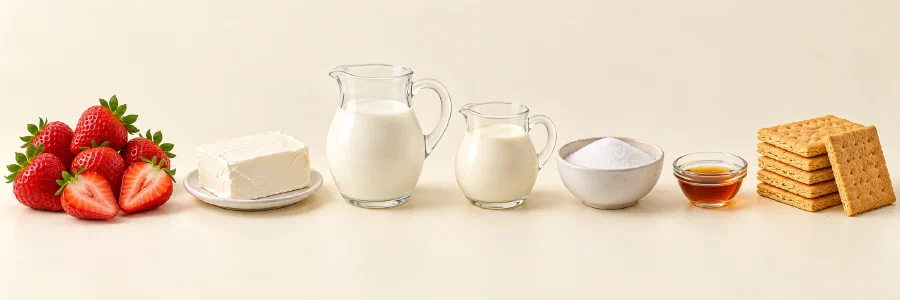
- Cream cheese is the classic helper. One tablespoon, softened and blended in until smooth, makes a pint noticeably creamier without any cheesecake flavor. Larger amounts turn it into a flavor as well. Cold cream cheese can leave tiny lumps, so soften it first and blend until smooth.
- Greek yogurt builds body and adds a gentle tang. Whole milk Greek yogurt gives the creamiest result, while nonfat yogurt can spin up chalky and icy. Yogurt bases freeze harder, so plan on a splash of milk and a respin when the first spin looks powdery.
- A quarter teaspoon of guar gum or xanthan gum whisked into the dry ingredients does similar work, and 2 tablespoons of sugar free instant pudding mix thickens a base the same way.
- Protein powder adds body along with protein. One scoop, roughly 25 to 35 grams per pint, is plenty. More tends to turn a pint gummy or chalky, and pure whey can spin up icy unless the base carries some fat.
Fruit and alcohol move the freeze too
Fruit brings flavor and water in equal measure. Watery fruit such as strawberries, melon, and pineapple can push a base toward icy if you add a lot of it, so choose ripe fruit, which carries more sugar and freezes softer. If you start from frozen fruit, thaw it and drain away the liquid that collects, or blend it into the base so the pint freezes as one smooth block. Never send loose frozen chunks through a spin on their own.
Alcohol works in the opposite direction. A tablespoon or two of vodka or rum in a pint lowers the freezing point and helps fruit bases and sorbets scoop softly. Treat it as a seasoning: pour in much more and the base may never freeze firmly enough to spin.
Slushi swaps are all about sugar
A slushi machine needs real sugar to work. A drink needs roughly 4 to 5 grams of sugar in every 100 ml before it will turn into slush instead of a solid sheet of ice. Fruit juice and regular soda clear that bar easily and slush straight from the bottle.
Diet soda does not. The sweeteners in diet drinks do not lower the freezing point the way sugar does, so a diet drink on its own freezes too hard to slush. The fix is to stir in about 2 tablespoons of simple syrup for every 240 ml of drink before you pour it in. Juice, honey, agave, and maple syrup can stand in for the simple syrup. Alcohol works against you here too, and a mix heavy on spirits stays liquid no matter how long it runs.
Frequently asked questions
Why did my pint freeze so hard after I swapped the sugar for a substitute?
It depends on the substitute. Erythritol and monk fruit blends freeze much harder than sugar and can turn gritty, while allulose keeps a base softer and closer to the texture sugar gives. If a pint comes out powdery or rock hard, add a tablespoon of milk and respin, and consider swapping only part of the sugar next time.
Can I make a pint with almond milk instead of whole milk?
Yes, but expect a thinner and icier result, because almond milk is mostly water and carries very little fat. Canned coconut milk is the creamiest dairy free swap, and oat milk lands in between. A spoon of coconut cream or nut butter blended into an almond milk base helps it spin up smoother.
Why does my diet soda refuse to slush?
Slush needs real sugar to form. The sweeteners in diet soda taste sweet but do not lower the freezing point, so the drink freezes too hard instead of turning to slush. Stir in about 2 tablespoons of simple syrup for every 240 ml before you pour it in and it will slush like a regular soda.
My fruit sorbet came out icy. What went wrong?
Fruit adds a lot of water, and water freezes into hard crystals. Use ripe fruit for its extra sugar, thaw frozen fruit and drain the liquid that collects before it goes into the base, and blend the fruit in so the pint freezes as one smooth block. A tablespoon of vodka or rum also helps a fruit base stay softer.
More helpful guides
See all tips & tricks → Creami
Your first Creami pint
A simple introduction to your machine, preparation and first frozen creation.
 Slushi
Your first Slushi batch
Get to know compatible liquids, fill lines and your first frozen drink.
 Creami
Why is my Ninja Creami crumbly?
Understand the texture, check the basics, and find the next step for your pint.